Pilgrimage of Grace uprising
The King's CurseThe Pilgrimage of Grace uprising is a northern mass movement that challenges Henry VIII’s control of the Church and the dismantling of traditional religious institutions. Calling their action a pilgrimage rather than a rebellion, its participants turn religious devotion into a public political claim: they demand the restoration of the old faith, law, and trusted royal advisers, and make their strength visible through banners, badges, and collective ritual. In Margaret Pole’s account, the movement appears powerful enough to force negotiation, yet its apparent victory rests on a royal pardon whose promises remain uncertain.
Causes and Political Meaning
The uprising grows out of a widening struggle over who may govern the Church and determine England’s religious life. Henry VIII has taken the Church under royal authority, while shrines are stripped and their powers denied; even pilgrim hostels have closed their doors. The conflict is therefore not only about religious observance. It concerns the laws, institutions, and local communities being reshaped by royal policy.
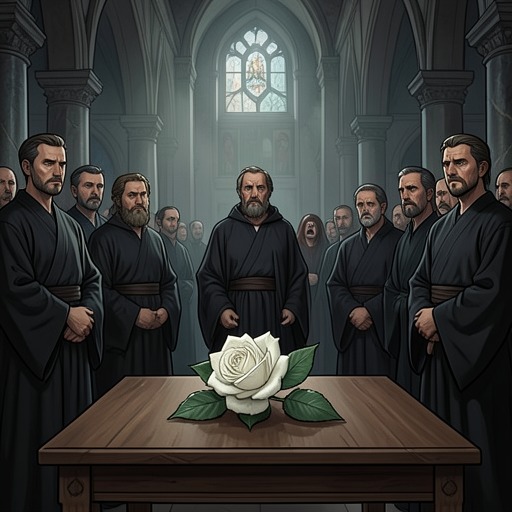
The movement’s name expresses its claim to legitimacy. When a supporter tells Margaret that this is a pilgrimage, not a rebellion, he describes participants as passing through a pilgrimage gate and marching under the Five Wounds of Christ. He identifies Margaret and other supporters of the White Rose of York with the same devotional cause. Religious language binds a diverse body of opponents together while distinguishing their self-understanding from the Crown’s likely description of them as insurgents.
Their demands make the political dimension explicit. The pilgrims seek the return of the faith of their fathers, the restoration of law and the king’s noble advisers, and the removal of Thomas Cromwell, Richard Riche, and bishops they regard as heretical. Their complaint connects the attack on the Church with changes in royal government: they oppose both religious dispossession and the advisers directing it.
Growth and Mobilization
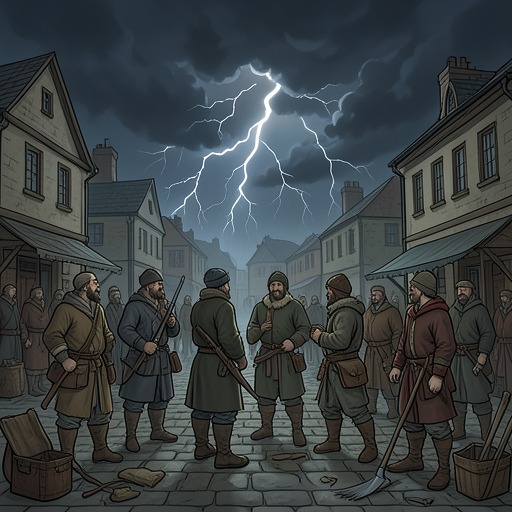
The movement’s scale becomes unmistakable in October, when Robert Aske enters York without a fight. The city opens its gates, and the force following him is said to number twenty thousand—four times the army that took England at the Battle of Bosworth Field. Its first actions in York are acts of restoration: the pilgrims reopen two Benedictine houses, Holy Trinity and the nunnery of St. Clement. When bells ring at Holy Trinity, people gather joyfully for Mass, making the return of worship a public demonstration of the movement’s support.
The uprising spreads beyond York. Lord Thomas Darcy gives Pontefract Castle to the pilgrims, and the people under his command in both castle and town swear the pilgrim oath. The Archbishop of York joins them. The Five Wounds of Christ, badges held at Darcy’s castle and issued to the pilgrims, mark the campaign as a sacred undertaking. Their presence also complicates the Crown’s military response: Margaret is told that no Christian can easily fire on an army marching under such a banner.
The Crown orders Margaret’s sons Montague and Geoffrey to raise forces and march north against the movement. Montague instead considers whether to join the pilgrims when the time is right, while Margaret is told to return south and prepare to provide leadership, money, and supplies should Berkshire rise in support. He plans to summon Reginald as well, imagining his return at the head of a Spanish army. These plans reveal how the uprising unsettles loyalties even among those formally commanded to suppress it; Margaret’s embroidered badge of the Five Wounds and White Rose becomes a private sign of the choice she believes her family faces.
Negotiation and Royal Pardon
At Doncaster, the pilgrims assemble in battle order against the royal army. Margaret’s account reports that their numbers exceed thirty thousand and that lords, gentry, and commoners from across the North stand together. The Crown’s forces are hungry and cold, lack adequate money for pay, and find little goodwill in the countryside; bad weather and reports of pestilence add to their difficulties. The pilgrims’ size and the weakness of the royal position make negotiation possible. Thomas Howard is fortunate, the narrative observes, that they agree to parley rather than fight.
The pilgrims present their demands to Howard, who is to carry their request for a general pardon and an agreement to restore the old ways to the king. Margaret understands the gathering as having won the war, and reports that even men in the royal army, including Howard, agree with the substance of the demands. The proposed settlement therefore seems to offer more than a safe dispersal: it raises the prospect of religious and political reversal.
Henry VIII eventually consents to issue a pardon. Howard carries it north through freezing weather, and the offer is presented to the assembled northerners outside Doncaster. Aske kneels before the pilgrims, tells them they have achieved a great victory, and asks to be released from his role as captain. Once they agree, he removes the Five Wounds badge and promises that they will wear no badge but the king’s. The gesture marks the formal close of their collective mobilization and the surrender of its independent emblem.
Aftermath and Significance
The settlement’s public meaning is reinforced by Aske’s later reception at court. Henry gives him a scarlet satin jacket and a gold chain, then asks what he wants. Aske speaks against Cromwell’s tyranny, argues that men expelled from the monasteries have been reduced to poverty, and insists that the abbeys matter to the people. He presents the Church as essential to England’s common life. Henry listens and says he will make Aske a member of the council. The exchange briefly brings the movement’s leader into the royal political world and gives the impression that its grievances have reached the king directly.
In London, bells ring for Christmas, and Margaret reads the public celebrations as joy at having saved the country, the Church, and the king from himself. During the court’s progress from Westminster to Greenwich, crowds cheer Princess Mary Tudor, despite her having been demoted and no longer officially recognized as a princess. Her Tudor rose is displayed with so little red at its center that it resembles the White Rose of York, and she also carries her mother’s pomegranate standard. The procession does not establish that the pilgrims’ aims have been permanently secured, but it makes visible the hopes their cause has encouraged.
Margaret puts away the badge Lord Thomas Darcy gave her, believing it is no longer needed as a secret reminder of loyalty and expecting her sons to return home. Her account thus presents the pardon and the movement’s dissolution as a moment of relief, not proof that the conflict has been resolved for good. The uprising’s significance lies in the way religious symbols, restored worship, mass participation, and demands for lawful counsel combine to compel the Crown to bargain—and in the fragile hope that a royal promise might restore what royal policy had overturned.